
What is Epiderm AI — and how does it fit into the aesthetic consultation?
An aesthetic consultation involves much more than choosing a treatment.
There is medical information to understand, photography to document, different facial areas to assess, treatment possibilities to explain — and ultimately, all of that needs to become a clear plan that both practitioner and patient can follow.
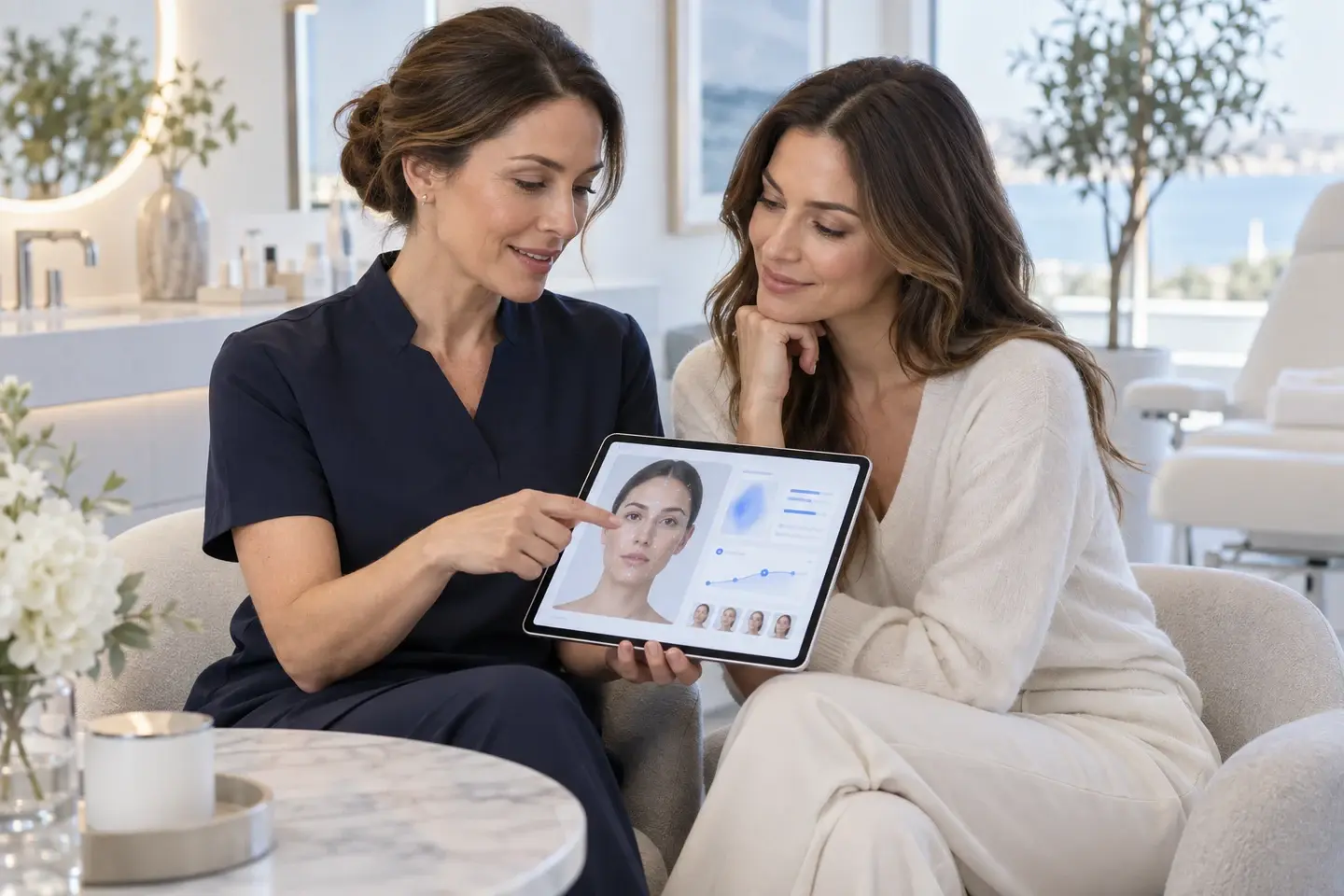
The platform brings patient information, photography, AI-assisted facial analysis, treatment planning and documentation into one connected workflow — while keeping clinical judgment and decision-making in the hands of the practitioner.
It starts with the patient profile
Each patient has an individual profile where the clinic can keep personal and contact information, relevant medical history, allergies, previous appointments, images, documents and other patient records.
Instead of starting each consultation from scattered information, the practitioner can review the patient’s context in one place.
Guided photography as part of the consultation
During the appointment, the practitioner can capture the patient from guided facial angles, including frontal, three-quarter and profile views.
Images are stored by appointment and can be used for analysis, documentation and visual follow-up over time.
The photographs become more than documentation — they become part of the consultation workflow.
From photography to facial analysis
Once the images are captured, Epiderm AI can generate a structured analysis of the face and skin using the photographs together with the information available in the patient record.
The analysis can include strengths, areas of attention, detailed findings and regional facial mapping.
The goal is not to replace the practitioner’s clinical assessment, but to help organize the information and make it easier to review and communicate.
From analysis to treatment planning
After reviewing the analysis, the practitioner can generate a personalized treatment plan based on the information gathered during the consultation.
The system can incorporate treatments, products and devices that the clinic has configured within Epiderm AI. Depending on the case, the plan may include skincare, active ingredients, devices, physical treatments and other clinical treatment directions.
AI may suggest treatment directions, but dosages and quantities are not automatically determined. Clinical decisions remain with the practitioner.
More than a treatment plan
Epiderm AI also includes tools that support the consultation beyond the initial analysis.
Practitioners can create personalized Skincare Prescriptions, consult a dedicated AI chat about the clinical case, generate patient-facing reports and documents, and document injection mapping directly on the patient’s image.
The platform also includes tools for appointment management, clinic hours, products and devices, and related clinic documentation.
So where does AI fit?
Not in place of the practitioner.
Epiderm AI is designed to support the organization of information, analysis, planning and presentation of treatment possibilities. It does not replace medical diagnosis, physical examination or the practitioner’s clinical decision-making.
Put simply:
The practitioner remains the one leading it.
Ready to see the workflow in practice?
See how Epiderm AI can support the consultation — from patient photography to treatment planning.