
From New Patient to Treatment Plan — The Epiderm AI Workflow
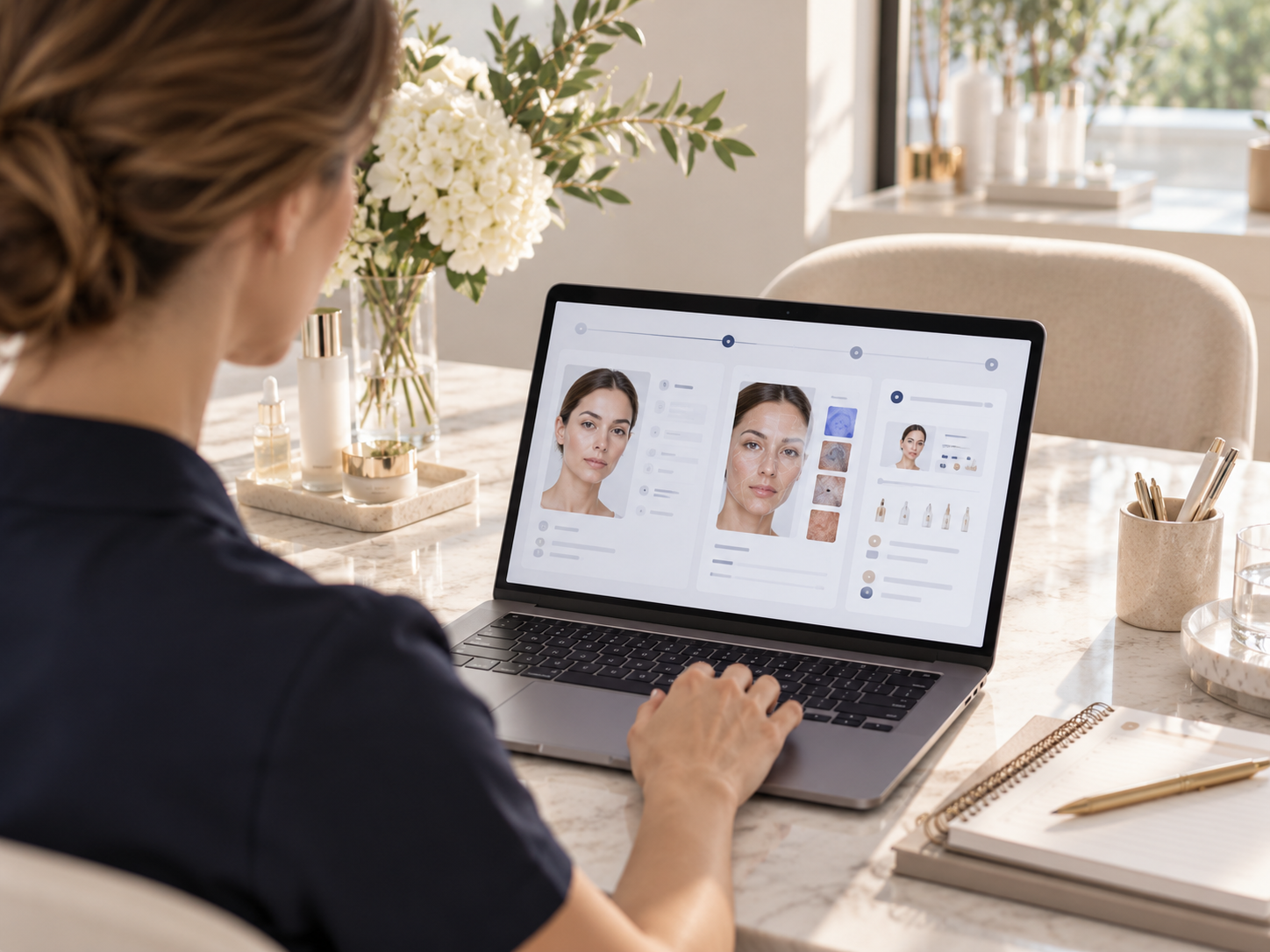
Epiderm AI was built around the real workflow of an aesthetic consultation: from the moment a patient enters the system, through photography and analysis, to the creation of a structured treatment plan that can be reviewed together.
1. Create the patient and appointment
Each patient has an individual profile where personal details, relevant medical information, images, documents and appointment history can be stored.
When a new appointment begins, the information stays connected to the same patient and consultation, so the practitioner does not have to start from scattered information each time.
2. Capture the patient
During the consultation, the patient is photographed through a guided capture process from multiple facial angles, including frontal, three-quarter right and left, and profile views.
The images are stored by appointment and can be used for analysis, documentation and future comparison.
3. Epiderm AI analyzes the images
Once the images are captured, Epiderm AI can generate a structured analysis of the face and skin using the photographs together with the information available in the patient record.
The analysis can include strengths, areas of attention, detailed findings and regional facial mapping.
The practitioner reviews the analysis and actively chooses whether to save it to the patient profile.
4. Generate the treatment plan
After the analysis has been reviewed, the practitioner can generate a personalized treatment plan based on the information collected during the consultation.
The plan can incorporate treatments, products and devices that the clinic itself has configured in the platform, depending on the case and the practitioner’s professional judgment.
AI may suggest treatment directions, but dosages and quantities are not automatically determined.
5. Save the plan and continue the patient journey
Once the plan is created, the practitioner actively saves it to the patient profile.
From there, the workflow can continue into documentation, patient-facing reports, Skincare Prescriptions, injection mapping and other tools when relevant.
Why this workflow matters
The goal is not to add more steps to the consultation. It is to connect steps that already exist — photography, assessment, planning and documentation — into one continuous workflow.
That helps the practitioner move from a new appointment to a treatment plan without spreading the information across separate images, notes and tools.
Want to see the workflow in practice?
See how Epiderm AI takes you from a new appointment to a structured treatment plan.