
The Aesthetic Consultation Is Becoming a Category of Its Own
The most interesting part of Allergan Aesthetics’ latest launch is not another product. It is the way the consultation itself is being elevated into a more structured part of aesthetic medicine.
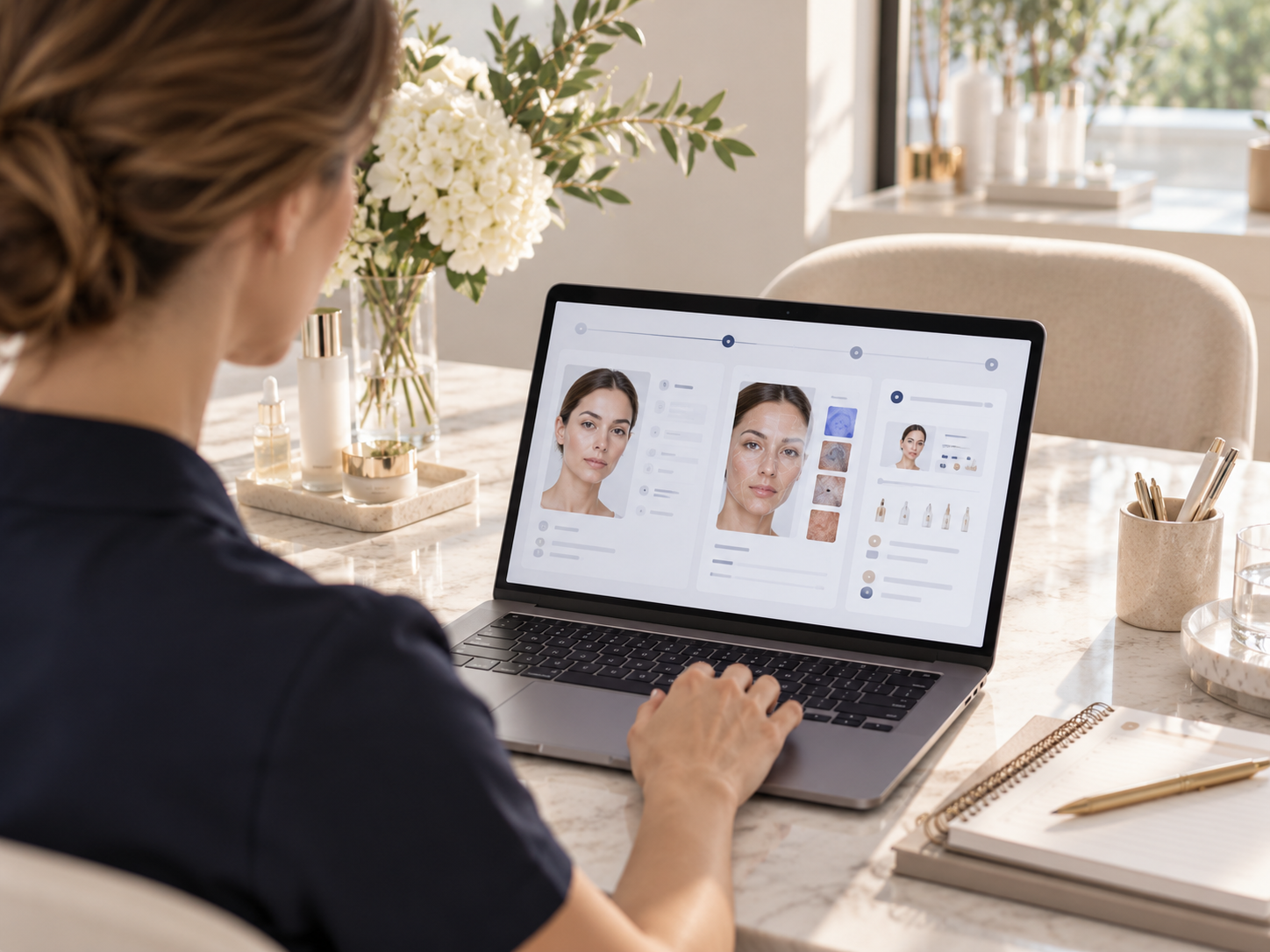
On September 22, Allergan Aesthetics announced the U.S. launch of AA Signature: SKIN360.
The company is not positioning SKIN360 as another standalone treatment or procedure. It describes it as a patient-centric, multimodal consultation approach designed to connect assessment, patient goals, multiple treatment possibilities and treatment planning.
According to Allergan, SKIN360 is the first in a series of assessment protocols intended to address patients’ evolving aesthetic goals. The company also highlights a striking figure: 96% of surveyed patients expressed interest in a comprehensive aesthetic consultation.
That may be the more important story.
Not another treatment.
Not another device.
Not another injectable.
But the fact that the consultation itself is beginning to develop its own structure, language and clinical importance.
For years, aesthetics has focused primarily on treatment
Much of aesthetic medicine is organized around treatment categories.
Fillers. Toxins. Lasers. Skin boosters. Biostimulators. Skincare.
Patients often arrive asking for a treatment they have already heard about.
Clinics display treatment menus.
Companies launch new products.
But between what the patient asks for and what ultimately makes sense lies a much more important step:
the consultation.
Before choosing a treatment, the practitioner has to understand:
What is the patient concerned about?
What do I see?
Which areas actually matter?
What should be prioritized?
What result is the patient looking for?
And which possibilities could work together as part of a broader plan?
Multimodal does not simply mean “more treatments”
The word multimodal can sound like it simply means combining several products or procedures.
But at a broader level, it reflects a change in thinking.
Instead of starting with a treatment and asking who it fits, the process starts with the patient.
The face.
The goals.
The assessment.
The context.
Only then do multiple treatment possibilities enter the conversation.
Allergan itself describes AA Signature as supporting personalized, multimodal assessments to help HCPs with individualized treatment planning.
That shift matters.
The consultation is no longer simply the introduction to treatment.
It becomes the place where strategy is created.
Why now?
Because aesthetic medicine is becoming more complex.
Practitioners have more options than ever.
More products.
More devices.
More treatment categories.
More combinations.
More procedures that can be applied to different areas, at different times, in different sequences.
As the number of possibilities grows, it becomes less useful to think:
“Which treatment should I do?”
And more important to think:
“What is the right strategy for this patient?”
That is where the consultation becomes much more valuable.
Patients may want more than a recommendation
Allergan’s 96% figure is especially interesting.
96% of surveyed patients said they were interested in a comprehensive aesthetic assessment.
That suggests something important.
Patients may not simply want a quick answer to:
“What can we do here?”
They may want to understand the bigger picture.
What the practitioner sees.
How different areas relate to one another.
What should be prioritized.
What options exist.
And why a particular plan makes sense.
That turns the consultation from the “soft” part of the appointment into something much more clinical and strategic.
Consultation → assessment → possibilities → strategy
The shift can be summarized simply:
Consultation → assessment → multiple treatment possibilities → personalized strategy.
It sounds obvious.
But in practice, it is very different from a consultation that begins with a treatment.
In this model, the product or procedure comes later.
First come:
the patient,
the information,
the photography,
the facial assessment,
the goals,
the preferences.
Then treatment.
And there is an important distinction
Allergan is building AA Signature around its own portfolio.
In SKIN360, the assessment is designed to help HCPs consider approaches using products within the Allergan Aesthetics portfolio.
That makes complete sense for the company.
But for a clinic, the broader principle may be even more interesting.
The consultation does not have to begin with a product.
It can begin with the patient.
The face.
The findings.
The goals.
And from there, build a strategy that considers the full range of options available to that practice.
Where Epiderm AI fits
In Epiderm AI, the idea is not to start with a treatment category.
It is to start with context.
Patient → information → photography → structured facial assessment → treatment possibilities → strategy.
The patient brings a concern.
Information provides context.
Photography becomes part of the assessment.
The assessment organizes what is being seen.
Treatment possibilities come later.
And the practitioner builds the strategy.
Technology can help structure and connect those steps.
But it should not begin with the answer.
The consultation itself is becoming a clinical product
This may be the larger shift.
For years, much of innovation in aesthetic medicine focused on what happens after the consultation.
A new injectable.
A new device.
A new technique.
But the next layer of innovation may be about what happens before treatment.
How information is collected.
How photography is captured.
How the face is assessed.
How findings are explained.
How possibilities are compared.
How strategy is built.
And how the entire process becomes clearer for both practitioner and patient.
When a major aesthetics company begins framing the consultation itself as a structured, multimodal, patient-centric experience, it suggests that the industry is beginning to see consultation as a more important part of the overall clinical offering.
The future may not be “Which treatments do you offer?”
It may be:
“How do you build the plan?”
That is a much more interesting question.
Treatments will change.
Products will change.
New categories will keep entering the market.
But the need to understand the patient, assess the face and build a strategy will remain.
And that may be why the aesthetic consultation is becoming a category of its own.
Not a preliminary step.
Not a formality.
But the place where aesthetic medicine comes together.
Better treatment plans start with better consultations.
See how Epiderm AI connects patient information, photography, structured facial assessment and treatment possibilities within one workflow.